Introduction
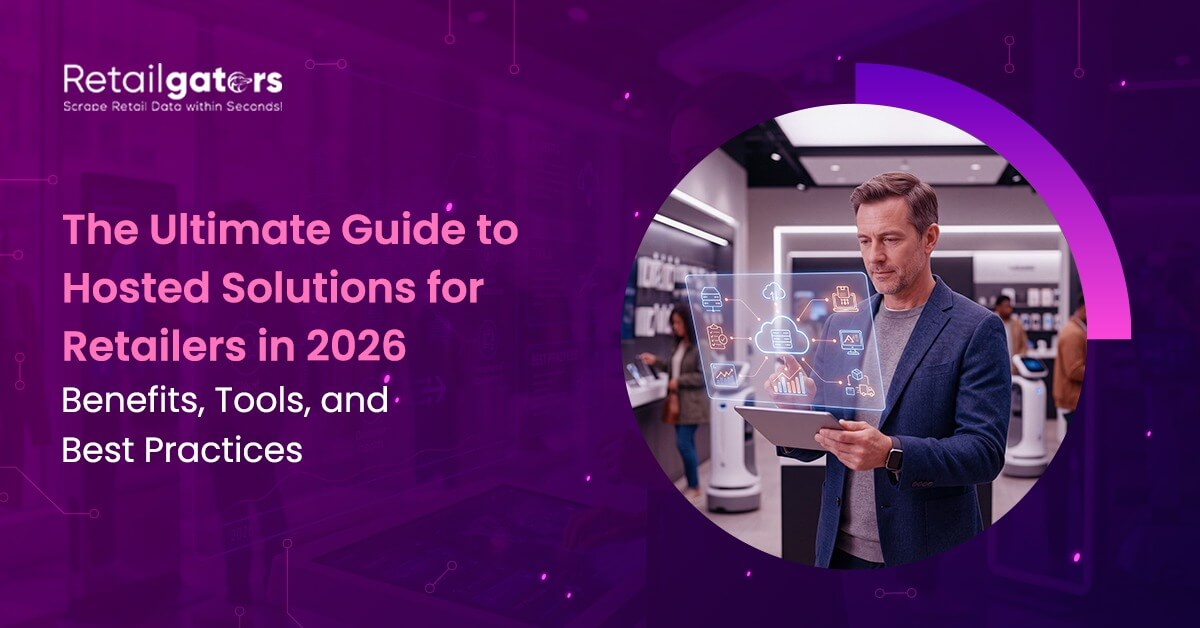
Retail infrastructure has undergone a quiet yet significant transformation over the past few years. The back room server, the dedicated IT contractor on speed dial, the annual hardware refresh budget, these are increasingly relics of a previous decade. What replaced them is a model built on remote access, provider-managed maintenance, and consumption-based pricing.
Hosted solutions sit at the center of that shift. Retailers across segments, specialty, grocery, fashion, and electronics have moved core operations onto platforms they access through a browser rather than a building. This guide covers what those platforms actually do, the measurable business case behind adoption, which tools matter in 2026, and how to avoid the implementation mistakes that undercut ROI.
What Do Hosted Solutions Actually Mean for Retail Operations?
Strip away the vendor language, and the definition becomes straightforward. A hosted solution is any software or IT service that runs on servers owned, maintained, and secured by someone else. The retailer accesses it through the internet. Nothing sits in the store room. Nothing requires an on-site technician when something breaks.
Retail applications of this model are broad:
- Cloud-based point of sale systems that process transactions and sync inventory in real time
- E-commerce hosted solutions manage product listings, checkout flows, and order routing
- Inventory and order management platforms pulling live data across every location
- CRM systems are consolidating customer purchase history from both physical and digital channels
- Payment processing infrastructure built to PCI DSS compliance standards from the ground up
The operational implication matters here. Hosted solutions for retail businesses remove the technical overhead that used to consume internal resources. IT teams shift from reactive maintenance to work that actually moves the business forward.
Why Have Retailers Accelerated Cloud Hosting Adoption?
Numbers confirm what anecdotal reports have suggested for years. A 2025 Gartner study found that more than 75% of mid to large retail organizations operate at least one cloud-hosted platform for core business functions. IDC projects the global retail cloud market will cross $45 billion by 2027. That growth does not happen without a credible business case behind it.
Does Moving to Managed Hosting Genuinely Cut Costs?
The answer from retailers who have made the switch is consistently yes. On-premises infrastructure carries costs that compound over time: hardware procurement, warranty contracts, power consumption, cooling systems, and the IT salaries required to keep everything running. Managed hosting services replace that stack with a monthly subscription. Usage determines the bill. Most retailers report IT expenditure reductions of 30 to 50% within the first twelve months. Beyond that, hardware failure as a budget line item effectively disappears.
How Does Scalable Hosting Address the Peak Season Problem?
Every retailer with a seasonal business knows the dilemma. Size the infrastructure for peak demand, and you overpay eleven months out of twelve. Size it for average demand, and your platform crashes when it matters most. Scalable hosting for retail eliminates that tradeoff. Capacity expands when traffic surges and pulls back when it normalizes. The platform handles the adjustment automatically. Retailers pay for actual consumption rather than worst-case scenarios.
What Security Posture Do Hosted Platforms Maintain?
Retail data carries significant regulatory weight. Payment card information, customer records, and transaction histories all fall under compliance frameworks that carry real penalties for breaches. Established managed hosting services providers hold ISO 27001 certification and SOC 2 Type II compliance as baseline requirements. Vulnerability patching, software updates, and active threat monitoring fall on the provider rather than the retailer. That shift alone reduces exposure materially.
What Business Benefits Does Hosted Infrastructure Deliver?
Hosted solutions have many advantages, including cost, reliability, flexibility, and operational efficiency. The breakdown below covers the ones with the clearest business impact:
| Benefit | Operational Meaning | Measurable Result |
|---|---|---|
| Cost Reduction | Subscription model replaces capital hardware spend | IT budget decreases 30 to 50% |
| Platform Uptime | SLAs lock in 99.9% or better availability | Revenue is protected from outage periods |
| Elastic Capacity | Automatic scaling tied to actual traffic volume | No performance degradation during peak demand |
| Security Coverage | Encryption, compliance tools, and patch cycles managed externally | Breach exposure reduced substantially |
| System Connectivity | API integrations across POS, ERP, and digital commerce | Data flows across the business without silos |
| Location Independence | Full access from any internet connected device | Multi‑store management without physical IT presence |
How Do Hosted Solutions Power Omnichannel Retail Execution?
Omnichannel retail is not a marketing concept. It is an operational requirement. Customers move between a retailer’s physical store, website, and mobile app and expect the experience to be consistent at every point. Inventory levels should match. Loyalty data should carry over. Pricing should not contradict itself depending on the channel.
Retail cloud solutions make that consistency technically achievable. Centralizing operational data across one connected platform means every system reads from the same source of truth. At RetailGators, retail technology specialists note that hosted solutions for retail businesses specifically address the fragmented data environments that prevent consistent cross-channel execution.
Hosted platforms deliver omnichannel capability through:
- Easily view inventory updates across physical locations and digital stores without reconciliation.
- Customer transactions are merged from physical locations & digital stores to create an all-inclusive profile.
- Orders can be managed from a single layer when purchasing click & collect, ship from store, or standard fulfillment, all from the same dashboard.
- Promotions can be centrally managed across all channels, and each promotion has only one configuration.
Which Hosted Platforms Deserve Attention in 2026?
The best hosted solutions for retail vary by business size, transaction volume, and the existing technology stack they need to connect with. That said, a short list of platforms holds up consistently across independent evaluations.
Small to Mid-Size Retail Operations
Shopify remains the dominant choice for direct-to-consumer brands at this scale. Its hosted e-commerce platforms include native payment processing, inventory management, and a deep app ecosystem that covers most operational gaps. Lightspeed Retail works particularly well for specialty retailers needing tight POS and online channel integration. Square for Retail provides retailers with reliable cloud hosting at prices that are easy to understand, along with enough omnichannel features to help their businesses grow.
Enterprise Retail Organizations
Salesforce Commerce Cloud handles the complexity of large scale retail cloud solutions with CRM integration built into the core architecture. Oracle Retail supports large format and multi location organizations requiring advanced retail IT infrastructure optimization across hundreds of locations. SAP Commerce Cloud manages intricate product catalogs and B2B commerce environments with a depth that few alternatives match.
E Commerce Focused Retail Brands
BigCommerce consistently delivers flexible e commerce hosted solutions that scale without requiring developer intervention for routine changes. Adobe Commerce, the platform previously marketed as Magento, remains the strongest option for retailers who need extensive storefront customization and advanced personalization capabilities built on open architecture.
What Implementation Practices Separate Successful Deployments?
Platform selection is the first step. What happens after that determines whether the investment pays off. The practices below apply across business sizes and platform categories.
Audit Existing Infrastructure Before Selecting Anything
Understand what you currently have before deciding what you need. Map out where your retail IT infrastructure optimization gaps are most acute, which legacy systems create the most friction, and where integration failures cost operational time. That audit shapes platform requirements rather than the other way around.
Weight Integration Depth Over Feature Volume
A platform connecting cleanly to your ERP, payment gateway, and logistics providers will consistently outperform a feature rich alternative that creates integration workarounds. Evaluate API documentation, native connector availability, and integration track records before finalizing any shortlist.
Structure the Data Migration Before Touching Anything
Moving customer records, order histories, and product data to cloud hosting for retailers requires precise planning. Map data fields between old and new systems before migration begins. Work through your provider’s onboarding team to build a phased timeline. Rushing this step generates data quality problems that take months to correct.
Commit to Staff Training Well Ahead of Launch
Most implementations that underdeliver do so because the people using the platform were not ready when it went live. Build training into the project timeline, not as an afterthought. Enterprise tier managed hosting services providers typically include customer success resources as part of their onboarding program. Use them.
Hold Providers to SLA Commitments Post Launch
Define the metrics you will track before signing a contract: uptime percentage, page response times, checkout completion rates, API latency. After launch, always measure against those benchmarks. At the same time, platform analytics dashboards show you ways to improve that get better over time.
How Does RetailGators Support Platform Selection?
Hosted solutions for retail businesses vary considerably in pricing structures, integration depth, and long term scalability. Evaluating them objectively requires frameworks that account for those variables across the full vendor landscape. RetailGators publishes curated platform comparisons, independently reviewed guides, and retail specific recommendations that give operations and IT decision makers the context to select with confidence rather than guesswork.
What Developments Will Shape Hosted Retail Solutions Through 2028?
Cloud solutions for retail are not set in stone. Several shifts are worth tracking:
- AI-powered automation in hosted environments now enables demand forecasting, dynamic pricing, and personalized recommendations, without requiring AI software to run separately.
- Edge computing brings hosted infrastructure to low-connectivity locations, regardless of connection quality, maintaining acceptable transaction speeds.
- A headless commerce system separates the storefront presentation from the logical backend, thereby extending design flexibility within a scalable retail environment.
- Carbon-neutral hosting is an emerging vendor selection criterion as ESG commitments are being included in retailer procurement decisions.
Conclusion
By 2026, hosted solutions will represent more than an enhancement to existing systems: they are already establishing the baseline infrastructure on which retailers can now compete. Hosting adoption rates, hosting cost reductions, and what can be achieved at scale with hosted solutions render on-premises infrastructure incapable of addressing the acute disparity in competitive performance that retailers using hosted solutions exhibit. Retailers should build a technical foundation for growth by conducting detailed audits of their existing infrastructure, assessing their integration requirements, and using third parties (such as RetailGators) to compare options before selecting a hosted solution. The business case is complete, the hosted solutions are developed and mature, and the only remaining variable will be the quality of execution.