From viral dance videos to product discovery, TikTok (has come a long way from its early days as a short-video platform. TikTok’s journey began in China with Douyin in September 2016, and ByteDance released the global version in September 2017. In 2018, ByteDance merged Musical.ly into TikTok, helping the platform reach a wider audience. Its popularity grew rapidly during the COVID-19 lockdown, turning it into one of the most influential platforms for online content and consumer engagement.
Today, TikTok is doing more than keeping users entertained. With TikTok Shop, it has brought product discovery, creator recommendations, and online shopping together in one place. And because of this, it has unlocked new doors for brands and sellers, but it has also made competition more fierce. Products can gain attention overnight, prices and promotions can change quickly, and customer preferences can evolve with the latest trends. Keeping up with these changes requires more than browsing videos or checking product listings manually.
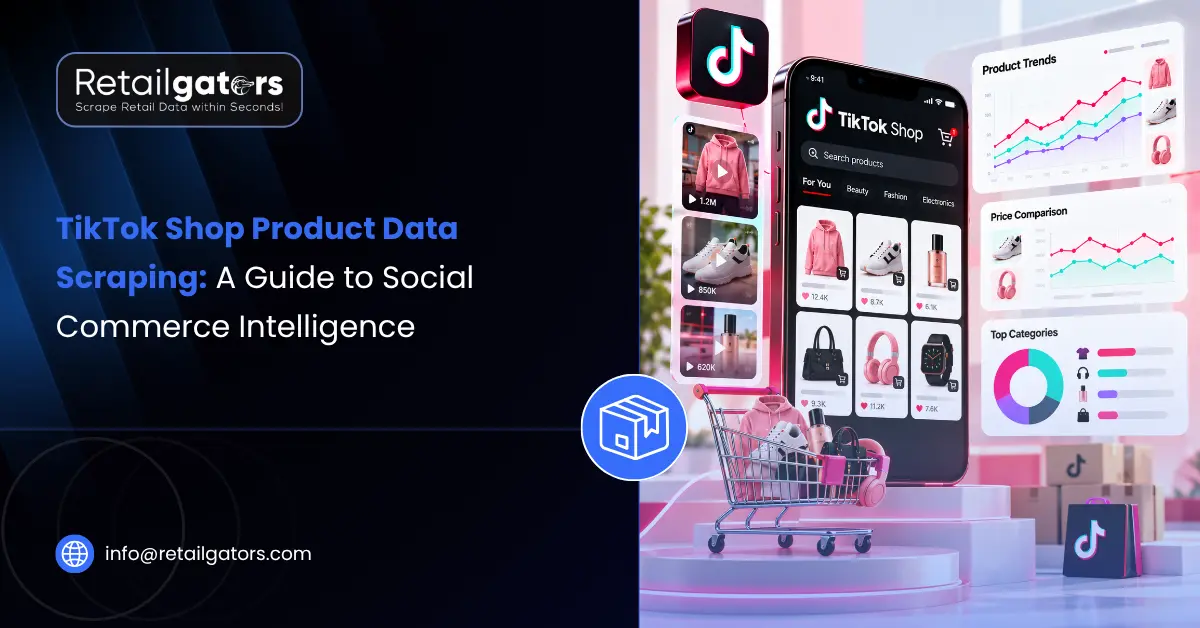
TikTok Shop product data scraping gives businesses a practical way to turn these marketplace changes into actionable social commerce intelligence. By collecting publicly available product details, prices, discounts, ratings, reviews, and seller information at scale, businesses can track emerging trends, benchmark competitors, understand customer sentiment, and identify new opportunities.
In this blog post, we will learn how TikTok scraping works, what data businesses can collect, what to consider before getting started, and how combining scraping with social media APIs can provide a broader view of the social commerce landscape.
What Differs TikTok Shop from Traditional Marketplace?
Unlike traditional marketplaces like Amazon, Walmart, and Target, TikTok Shop operates differently, and these differences have profound implications for competitive strategy. Content drives discovery, not search.
On traditional marketplaces, consumers have to search for products using keywords. On TikTok Shop, consumer products are discovered through short videos, live streams, and creator recommendations. The “algorithm” is the For You Page, not a search bar. Businesses can use this data to evaluate product quality and measure customer satisfaction.
Creators are the distribution channel. TikTok Shop’s affiliate program connects brands with creators who promote and sell products through their content. TikTok Shop brands with strong creator networks often gain a competitive advantage. Understanding which creators are driving sales for competitors, and what commission rates they are offering, is a crucial competitive advantage.
TikTok trends can emerge and peak within days, giving brands a narrow window to capitalize on viral products. At the same time, tracking prices is challenging because they can vary by creator, promotion, and platform-specific discounts, making competitor price monitoring more complex than on traditional marketplaces.
What Data Can You Scrape from the TikTok Shop?
TikTok Shop offers several data points that help businesses understand the market. However, knowing which data to collect depends on your specific business goals.
- Pricing Data: This data includes current prices, original prices, discount percentages, and promotional details. Moreover, historical pricing data reveals pricing patterns and seasonal trends.
- Product Information: You can extract basic information like product names, descriptions, SKU numbers, and category classifications.
- Engagement Metrics: Engagement data encompasses view counts, like share numbers, views, and comment volumes. These metrics indicate product popularity and consumer interest levels.
- Seller Details: Seller information includes shop names, seller ratings, response rates, and location data. This information helps identify reliable sellers and partnership opportunities.
- Review and Rating Data: Customer reviews, star ratings, review dates, and verified purchase indicators provide authentic consumer feedback. Businesses can use this information to evaluate product quality and measure customer satisfaction. Clear data requirements help you build an efficient scraping solution.
- Inventory Status: Stock availability, inventory levels, and restock notifications help track product demand and supply chain patterns. RetailGators can keep track of these metrics continuously for real-time insights.
How to Collect Product Data from TikTok Shop
TikTok scraping involves sending automated requests to the platform, retrieving HTML content, and extracting relevant data points. The process requires careful planning to ensure compliance and data accuracy.
Step 1: Determine What Data to Collect
First things first, determine what data you want to gather exactly. Create a list of specific fields like product names, prices, and seller information.
Step 2: Pick the Right Scraping Approach
The next step is to pick the right scraping approach. Each approach has distinct advantages depending on your technical capabilities and data volume requirements.
Step 3: Set up Your TikTok Shop Scraper
After choosing the right approach, you can build a custom scraper with programming languages or hire a professional social commerce data scraping provider like RetailGators. Professional scraping service providers handle technical challenges and maintain consistent data delivery.
Step 4: Clean and Organize the Data
The scraper collects raw data in an unstructured format. You must clean and structure the raw data before analyzing it. Convert the unstructured HTML into organized formats like CSV, JSON, and Excel files.
Step 5: Store and Process Data
Lastly, store your data in databases or data warehouses. Thereafter, apply analytics tools to extract actionable insights from the collected information.
What are the Use Cases of TikTok Shop Scraping?
Trend Modification
Monitor trending products and categories on TikTok Shop to identify emerging consumer demand before it reaches traditional marketplaces. Brands that spot trends early on TikTok can adjust their product development, sourcing, and marketing strategies months ahead of competitors.
Competitive Pricing Intelligence
Track how competitors price their products on TikTok Shop relative to Walmart, Target, and their own DTC channels. Many brands use TikTok Shop as a testing ground for aggressive promotional pricing; understanding these strategies helps you position your own pricing effectively.
Content Strategy Optimization
Study the content formats, messaging, and presentation styles that drive the highest engagement and sales on TikTok Shop. Apply these insights to your own content creation and creator briefing.
Creator Strategy Development
Analyze which creators are generating more sales in your category, what types of content they produce, and which brands they partner with most frequently. Use this intelligence to identify potential creator partners and develop competitive commission offers.
Cross-Platform Strategy
Compare product performance, pricing, and positioning across TikTok Shop, Amazon, and your DTC channels. Ensure consistency where needed and leverage platform-specific opportunities where they exist.
What are the Technical Challenges of Scraping TikTok Shop
TikTok Shop uses several anti-scraping mechanisms, so understanding these barriers is critical for developing effective data collection strategies.
Dynamic Content Loading
TikTok uses JavaScript frameworks to load content dynamically across its short-video platform. Standard HTTP requests only retrieve initial HTML without product data. Therefore, you need JavaScript rendering capabilities.
Anti-Bot Protection
Like other marketplaces, TikTok Shop uses a complex bot detection system to analyze request patterns, browser fingerprints, and user behavior. As a result, TikTok Shop can easily block scrapers that trigger its detection system. But RetailGator’s scraping services utilize advanced techniques like residential proxies, browser fingerprint rotation, and human-like browsing patterns to bypass these protections effectively.
Rate Limiting
TikTok servers trigger rate limits when scrapers send too many requests. Frequent requests can cause TikTok to temporarily block IP addresses that exhibit suspicious activity. Thus, implementing request throttling and proxy rotation becomes essential.
Data Structure Changes
TikTok frequently changes its website structure, which can disrupt scrapers that depend on specific HTML elements. Keeping data extraction reliable therefore requires regular maintenance and updates. Expert handlers like RetailGators adapt their scraping logic to platform changes, helping maintain consistent data collection and minimize disruptions.
How RetailGators Simplifies TikTok Shop Data Extraction
RetailGators helps brands gain valuable insights into TikTok Shop through product data scraping. Its services cover product prices and catalog details across categories, seller performance, and estimated sales trends, creator and affiliate engagement, daily trending product discovery, and cross-platform price comparisons with Amazon and other marketplaces.
RetailGators uses scalable data extraction infrastructure to address the technical challenges of collecting TikTok Shop data. It delivers clean, structured, and accurate datasets that help businesses track market trends, benchmark competitors, and make informed decisions.
Final Thoughts
TikTok Shop is evolving rapidly, and staying competitive means understanding trends, pricing shifts, creator performance, and customer preferences before opportunities pass. TikTok Shop product data scraping helps businesses turn these market signals into actionable insights, enabling smarter pricing, stronger content strategies, and better-informed decisions. With RetailGators, brands can simplify data collection, track competitors, and uncover new opportunities in the fast-growing social commerce market.