What is Quick Commerce Data Scraping and Why Do Retail Brands Need It?
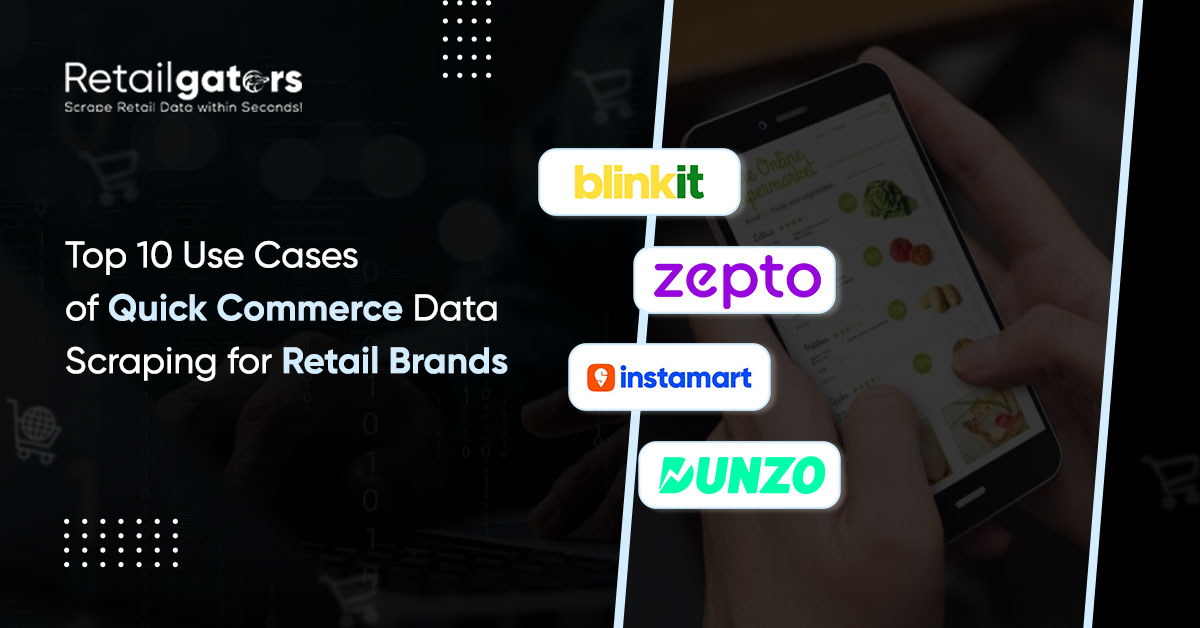
Quick commerce data scraping is the automated process of extracting real-time information from instant delivery platforms like Blinkit, Zepto, Swiggy Instamart, and Dunzo. Retail brands use this technique to monitor competitor pricing, track product availability, and analyze market trends within the fast-growing q-commerce sector.
RetailGators specializes in providing quick commerce data scraping solutions that help retail brands make data-driven decisions in minutes rather than days. Therefore, understanding these use cases becomes essential for staying competitive in today's rapid-delivery marketplace.
The q-commerce industry grew by 78% in 2024 alone. Consequently, brands that leverage data scraping gain significant advantages over competitors who rely on manual research methods.
How Does Price Monitoring Benefit Retail Brands?
Price monitoring through data scraping allows retail brands to track competitor pricing across multiple quick commerce platforms simultaneously. This real-time intelligence helps brands adjust their pricing strategies instantly.
RetailGators enables brands to scrape pricing data from dozens of q-commerce platforms every hour. For instance, a beverage brand can monitor how competitors price similar products across Blinkit, Zepto, and Swiggy Instamart within specific delivery zones.
Dynamic pricing has become standard in quick commerce. However, manual price checking across platforms wastes valuable time and resources. Automated data scraping solves this problem efficiently.
Brands using price monitoring typically see 15-23% improvement in their pricing competitiveness. Moreover, they can respond to competitor discounts within hours rather than days.
Why is Product Availability Tracking Critical?
Product availability tracking helps retail brands understand which items remain in stock across different quick commerce platforms and delivery zones. This data reveals supply chain strengths and competitor inventory strategies.
Out-of-stock situations directly impact brand reputation and customer loyalty. Therefore, monitoring availability patterns helps brands optimize their distribution agreements with q-commerce platforms.
RetailGators provides hourly availability checks across multiple platforms. Subsequently, brands can identify which competitors maintain better stock levels and adjust their supply chain accordingly.
A personal care brand discovered through availability tracking that their competitor maintained 94% stock availability compared to their 67%. This insight led to improved distribution strategies that increased their availability to 89% within three months.
How Can Assortment Analysis Drive Product Strategy?
Assortment analysis involves examining which products competitors list on quick commerce platforms, including pack sizes, variants, and product categories. This intelligence shapes better product portfolio decisions.
Brands often struggle to determine which SKUs perform best in the q-commerce channel. However, analyzing competitor assortments reveals market preferences and category trends.
RetailGators scrapes complete product catalogs from major q-commerce platforms daily. For example, a snack brand can identify that competitors focus on smaller pack sizes (100g-200g) rather than family packs in quick commerce.
Furthermore, assortment data shows seasonal trends. Ice cream brands increase SKU variety by 40% during summer months, while warm beverage brands expand assortments during winter.
What Role Does Promotional Intelligence Play?
Promotional intelligence tracks competitor discounts, offers, bundle deals, and cashback campaigns across quick commerce platforms. This data helps brands design more effective promotional strategies.
Quick commerce platforms run hundreds of promotions weekly. Therefore, understanding which promotional tactics drive results becomes essential for marketing success.
RetailGators captures promotional data including discount percentages, offer durations, and bundling strategies. Consequently, brands can benchmark their promotional intensity against competitors.
Research shows that brands with promotional intelligence increase their ROI on marketing spend by 31%. Additionally, they avoid over-discounting that erodes profit margins unnecessarily.
How Does Customer Review Analysis Improve Products?
Customer review analysis involves scraping and analyzing product reviews, ratings, and customer feedback from quick commerce platforms. This unfiltered consumer insight drives product improvements and marketing messaging.
Reviews on q-commerce platforms differ from traditional e-commerce feedback. Quick commerce customers specifically mention delivery speed, packaging quality, and product freshness alongside traditional product attributes.
RetailGators extracts review data including star ratings, sentiment analysis, and common complaint themes. For instance, a dairy brand discovered that 23% of negative reviews mentioned packaging leaks, prompting immediate packaging redesign.
Moreover, competitive review analysis reveals gaps in competitor products. Brands can position their products to address these specific customer pain points effectively.
Why is Delivery Zone Intelligence Important?
Delivery zone intelligence maps which products competitors offer in specific geographical areas through quick commerce platforms. This hyperlocal data helps brands optimize their distribution strategies.
Quick commerce operates through dark stores serving specific delivery zones. However, product availability varies significantly across different zones based on local demand patterns.
RetailGators provides zone-level data scraping that shows competitor presence across micro-markets. Subsequently, brands can identify underserved zones and prioritize distribution expansion accordingly.
A beverage brand used delivery zone intelligence to discover that competitors had weak presence in 12 high-income neighborhoods. Targeting these zones increased their sales by 34% within that quarter.
How Can Search Ranking Optimization Increase Visibility?
Search ranking optimization involves tracking how products rank for specific keywords within quick commerce platform search results. Better rankings directly correlate with higher sales volumes.
Most q-commerce purchases begin with platform search rather than category browsing. Therefore, understanding ranking factors becomes critical for visibility and conversion.
RetailGators tracks keyword rankings for thousands of search terms across platforms daily. For example, tracking rankings for "protein bar" helps brands understand which product attributes and listing optimizations improve visibility.
Furthermore, competitor ranking analysis reveals successful SEO tactics. Brands that implement these insights see average ranking improvements of 8-15 positions within weeks.
What is Category Performance Benchmarking?
Category performance benchmarking compares how entire product categories perform across different quick commerce platforms. This macro-level intelligence guides channel investment decisions.
Different platforms emphasize different categories based on their customer demographics and business strategies. However, determining which platform works best for specific categories requires comprehensive data analysis.
RetailGators provides category-level metrics including average prices, assortment breadth, and promotional intensity. Consequently, brands can allocate resources to platforms where their category shows strongest performance.
Health supplement brands discovered that Zepto shows 67% higher category emphasis compared to Blinkit. This insight helped them prioritize their partnership investments effectively.
How Does New Product Launch Tracking Work?
New product launch tracking monitors when competitors introduce new products on quick commerce platforms, including launch timing, pricing strategies, and initial promotional support.
Understanding competitor innovation patterns helps brands time their own launches strategically. Moreover, it reveals market gaps and emerging consumer trends early.
RetailGators automatically detects new product listings across platforms daily. For instance, when three competitors launched functional beverages within one month, it signaled growing category demand.
Additionally, launch tracking shows which innovations succeed or fail. Brands avoid costly mistakes by learning from competitor experiences in the market.
Why is Packaging and Labeling Intelligence Valuable?
Packaging and labeling intelligence involves analyzing product images from q-commerce platforms to understand competitor packaging designs, label claims, and visual merchandising strategies.
Quick commerce customers make purchase decisions in seconds based on product images. Therefore, packaging optimization becomes even more critical than in traditional retail channels.
RetailGators uses image scraping to analyze packaging elements including size claims, health badges, and visual hierarchy. Subsequently, brands can optimize their packaging for better conversion rates.
Research indicates that packaging optimizations based on competitive intelligence improve click-through rates by 19-27%. Furthermore, clear labeling increases purchase confidence among quick commerce shoppers.
How Should Retail Brands Implement Quick Commerce Data Scraping?
Implementing quick commerce data scraping requires three essential steps: defining clear objectives, selecting reliable scraping tools, and establishing regular analysis workflows.
First, brands must identify their specific intelligence needs. Price monitoring requires hourly updates, while assortment analysis needs weekly data collection.
RetailGators offers customizable scraping solutions that match different business requirements. Moreover, the platform provides data in actionable formats that integrate with existing business intelligence systems.
Successful implementation also requires cross-functional collaboration. Marketing, sales, and product teams must all access and act on the scraped data regularly.
Brands that establish systematic data scraping workflows see 3-5x faster decision-making compared to competitors relying on manual research. Additionally, they identify market opportunities 2-3 weeks earlier on average.
What are the Ethical and Legal Considerations?
Quick commerce data scraping must comply with platform terms of service and data protection regulations. Responsible scraping practices protect both brands and consumers.
RetailGators follows ethical scraping guidelines including reasonable request rates and respect for robots.txt files. Therefore, brands can gather competitive intelligence without violating legal boundaries.
Publicly available data like prices, product names, and availability can be scraped legally. However, personal customer data and proprietary algorithms remain protected.
Consulting with legal experts before implementing scraping programs ensures compliance with evolving regulations. This proactive approach prevents potential legal complications down the road.
Conclusion: Transforming Quick Commerce Strategy Through Data Intelligence
Quick commerce data scraping has evolved from a competitive advantage to a business necessity for retail brands. The ten use cases outlined above demonstrate how systematic data collection drives better decisions across pricing, distribution, product development, and marketing.
RetailGators provides the tools and expertise retail brands need to harness quick commerce data effectively. By implementing these scraping use cases, brands gain real-time market intelligence that translates directly into revenue growth and market share gains.
The q-commerce sector will continue expanding rapidly. Therefore, brands that invest in data scraping capabilities today will dominate their categories tomorrow. Start with one or two use cases, measure results, and gradually expand your data intelligence operations for maximum impact.