Introduction
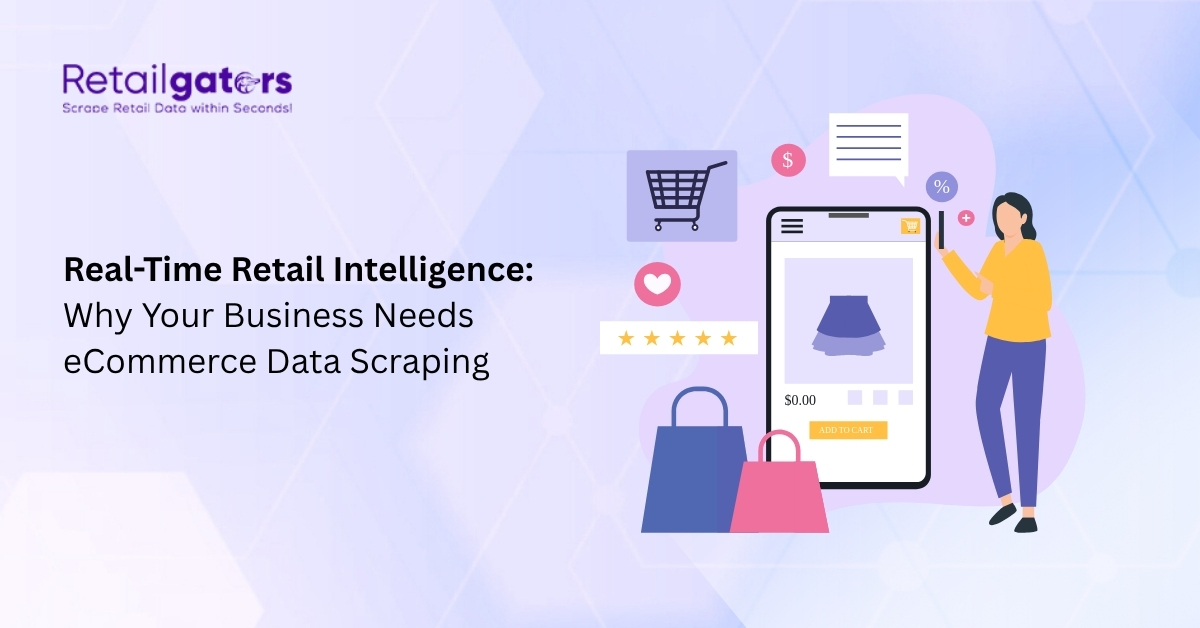
The e-commerce space is changing very quickly. eCommerce activity is occurring every second. With millions of transactions occurring each minute, retailers who still collect data manually or conduct slow market analysis will be left behind. Real-time retail intelligence is now a competitive requirement. With real-time retail intelligence, eCommerce retailers can empower themselves with instant insights, enabling quick and informed decisions to act on changes in consumer behavior. That is only made possible with e-commerce data scraping, a technological method and tool used by retailers to collect, analyze, and act on vast amounts of market data the moment it becomes available.
What is Real Time Retail Intelligence?
Retail intelligence involves the acquisition, research, and utilization of data related to retail markets, competitors, and consumers. In a real-time setting, this involves gaining access to the most current data available, including:
- Competitor pricing and promotions
- Market demand and trend data for products
- Customer reviews and sentiment
- Availability & assortment changes
Real-time intelligence enables retailers to transition from a reactive to a proactive environment, allowing merchants to adjust their strategies more quickly than their competitors.
What Is The Importance of eCommerce Data Scraping?
E-commerce data scraping is transforming how retail companies collect and utilize online data. By automating the data collection process from product pages, marketplaces, and competitors’ sites, data scraping gathers data from multiple sources, providing a snapshot in time that would be difficult to collect manually or consistently.
Data scraping enables you to monitor the key elements affecting retail 24/7 continuously. Pricing levels, inventory levels, product availability, customer sentiment, promotions, and overall marketing effectiveness across the entire retail spectrum. No longer will you have to rely on outdated information or only a portion of the information you need. Instead, with eCommerce data scraping, you can observe changes in thousands of products as they occur, allowing for critical decision-making in product pricing, inventory management, and promotional planning.
One of the most interesting aspects of eCommerce scraping is the ability to collect highly detailed, accurate, and ongoing product information, not limited to price, but also including specifications, complete ingredient lists, delivery speeds, user ratings, and even seller messaging. Any component of a product that you want to track can be collected from potential sources of product information, providing a data pool to enrich your product catalog, enhance customer experiences, and inform product research and development.
Indeed, if you could collect all this valuable data manually, it would require an extraordinary amount of time and effort. The accuracy of the content collected, as well as the need for continual monitoring and changes made to product content, are reasons why manual collection is not an effective method for product development. Web scraping solutions mitigate this inefficiency by automating the data collection process. What took hours or days will now only take minutes, while maintaining the scale, consistency, and simplicity.
With available cutting-edge scraping solutions that leverage the new capabilities of AI and machine learning, organizations can transform data from the web into usable and actionable intelligence. Through competitive benchmarking, trend analysis, and even retail marketplace observations, retailers can be equipped with the data to make quicker, smarter, and more valuable decisions.
If your business operates in the competitive online retail space, data scraping is no longer optional; it is a core element that enables agility, competitiveness, and ultimately, your business’s long-term success.
What Are The Key Benefits of Real-Time eCommerce Data Scraping?
Dynamic Pricing Opportunities
With real-time pricing data collected from competitors’ websites, retailers can do a few things:
- Monitor market prices for hundreds or thousands of SKUs in real-time to catch price changes, discounts, and promotional campaigns.
- React to these pricing changes instantaneously with their own pricing decisions, so they do not price themselves out of the market, or leave money on the table.
- Execute informed pricing strategies, including dynamic pricing models which can incorporate competitor pricing, demand elasticity, seasonality, and inventory levels—ultimately maximizing sales volumes and profit margin!
Competitive Intelligence
eCommerce scraping provides businesses with actionable intelligence about their competitors, including:
- Monitoring products, bundles, and category expansions—looking for shifts in their product strategy or positioning.
- Tracking pricing patterns and promotional strategies, which helps forecast seasonal campaigns or discounting behaviors.
- Benchmarking their brand against competitors in terms of product features, reviews, ratings, or prices, highlighting opportunities for improvement, or advantages.
Assortment and Inventory Decision-Making
When optimizing stock and assortment decisions, the real-time insight into competitors’ inventories can:
- Identify which products are consistently in stock or out of stock among retailers.
- Determine which products are trending or in demand to inform better replenishment and inclusion decisions.
- Provide a more precise model for inventory timelines, so retailers can manage stock levels effectively and avoid chasing past trends or relying on luck.
Better Customer Experience
Scraped data will also help retailers better monitor reviews and social sentiment, so:
- They can monitor customer feedback at scale by identifying the more frequent complaints or trends that indicate dissatisfaction.
- They can react quickly to problem areas as they emerge, such as defective products or shipping issues, and be confident that the brand can rebuild trust with customers.
- They can improve product selections and service quality based on actual customer feedback, to help deliver a personalized experience that meets and exceeds customer expectations.
Identifying Market Opportunities
Data scraping provides new paths for growth by:
- The discovery of product shortages, narrowly defined categories, or unmet customer wants.
- Understanding the volume of reviews, or the volume of interest, to gauge potential demand before launching a new product or sourcing new inventory.
- Spotting niche trends or categories of customers that are served poorly, which represent opportunities for speed into what may be low-competition areas with high growth potential.
How Real-Time Retail Intelligence Transforms Business Decisions?
Real-time retail intelligence enables organizations to access live market data, rather than relying on outdated reports or periodic market scans. With real-time data, organizations can better monitor competitor prices, product availability, customer sentiments, and brand new trends. Real-time visibility enables a business to adjust its prices, implement powerful promotions, or fully stock hot-selling items before its competitors can.
It not only impacts profitability. Businesses can significantly reduce risk. By monitoring competitors’ behaviors and dynamics on an hourly basis, companies can prevent being underpriced, running out of stock, and purchasing underperforming products, among others.
Real-time data is also essential for personalized and customer-centric strategies. Organizations can leverage real-time feedback and actual behaviors to personalize promotions, recommend relevant products, and effectively triage service issues (which is better if done quickly). All of this creates a better experience and promotes loyalty.
Ultimately, real-time retail intelligence means improved ROI. Companies can allocate their resources (pricing, inventory, marketing) to where they will matter the most. With the increasing demand for speed, agility, and data-driven decisions from customers, there has never been a better time to implement real-time retail intelligence. The benefits are significant, and the transformation is a necessity.
What Are The Common Challenges?
While there are many advantages, there are also challenges that businesses can face, including:
- Legal and Ethical Issues: Copyright, Terms of Service, and Data Privacy.
- Technical issues: Anti-bot protection, cleaning data, and data quality.
- Data overload: Discerning the actionable intelligence from large data sets.
- Working with experienced and trusted data scraping providers and utilizing automated data scraping tools will help overcome the aforementioned challenges, enabling continued access to clean, compliant, and relevant retail data.
Conclusion: Why Your Business Needs eCommerce Data Scraping (and Why You Should Consider RetailGator)
Today’s fast-paced and agile retail landscape often leaves little room for instinct and delays in insights. Retail intelligence services that offer real-time eCommerce data scraping will help businesses stay ahead of their competition and equip them to make better pricing decisions, improve product cycles, and prioritize the customer’s needs.
Once businesses recognize the importance of real-time market data, the question will soon become, “Who can I trust?” RetailGator has established a reputation as an expert in eCommerce data scraping solutions, and we have developed a technical and legal framework to ensure our services remain robust, scalable, and compliant.
RetailGator offers a method for businesses to gather reliable, accurate, and usable intelligence from the global digital retail landscape. RetailGator’s mission is to make sense of the millions of pages of raw data available online, so you can stay ahead of your competition, innovate better, protect your margins, and position yourself for the future’s growth horizons.