Introduction
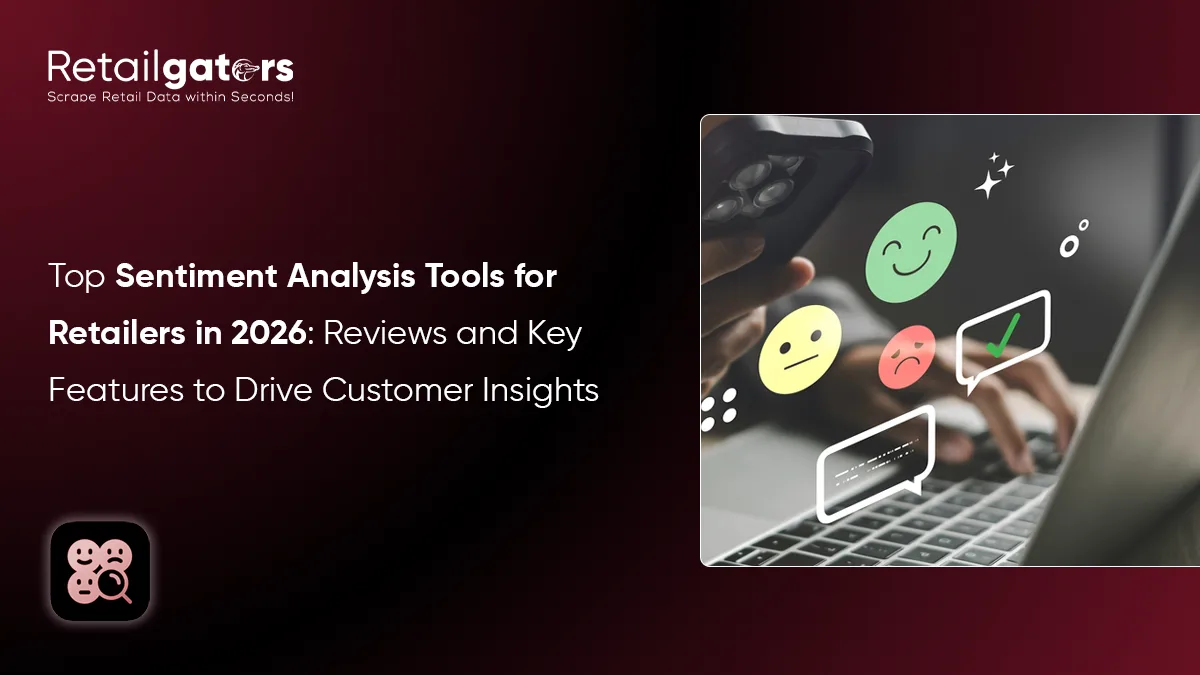
Most retail teams are generating more customer feedback than they can realistically read. Reviews pile up across product pages, social mentions go untracked until something escalates, and post purchase surveys sit in a queue for weeks. By the time someone flags a recurring complaint, the problem has already widened. This is the gap that sentiment analysis tools were built for — not as a reporting layer, but as an operational one that processes customer language as it arrives and surfaces what matters before it compounds.
Some platforms worth evaluating in 2026 are covered below. Pricing, core capabilities, integration requirements, and retail specific fit are each addressed. The list covers the full market range, from enterprise contracts above $40,000 annually to e-commerce tools starting under $100 per month, so the selection considerations vary considerably depending on where a retailer sits in that range.
What Is Retail Sentiment Analysis and Why Does It Matter?
Retail sentiment analysis is what happens when AI and natural language processing read customer text so your team does not have to do it manually. Product reviews, social comments, chat logs, return reason fields, survey responses — the technology works through all of it, assigns emotional classifications at the phrase level, and rolls those classifications into trend data that shows patterns over time.
Gartner’s 2024 findings put adoption at over 70 percent among customer experience leaders, and Forrester’s parallel research found that continuous AI powered sentiment analysis doubled the odds of retaining customers who showed early dissatisfaction signals, compared to brands running quarterly survey cycles.
Across assessments published on RetailGators, the same pattern holds: retail brands that have made customer opinion analysis a standard operational input — rather than a quarterly report — consistently post stronger Net Promoter Scores and higher repeat purchase rates than those that haven’t.
How Do RetailGators Evaluate Sentiment Analysis Tools?
Every platform reviewed on RetailGators gets evaluated on the same five criteria — the ones that come up repeatedly in actual sentiment analysis software for retail deployments, not just vendor demos:
- Accuracy: Detection quality on sarcasm, irony, product specific vocabulary, and mixed sentiment, not just obvious positive or negative signals
- Integration coverage: Native connectivity to CRM platforms, commerce systems, helpdesk tools, and point of sale environments
- Processing speed: Time from feedback ingestion to alert delivery, especially for brands managing high review volumes or large social audiences
- Dashboard accessibility: Whether non technical retail staff can extract actionable insight without analyst or developer support
- Pricing transparency: Legible cost structures without undisclosed minimums, per seat multipliers, or module based fees that inflate total contract value
Top Sentiment Analysis Tools for Retailers in 2026
Medallia: Best for Enterprise Retail Sentiment Tracking
When feedback is arriving from physical locations, mobile applications, e commerce channels, and contact centers at the same time, lighter tools tend to buckle. Medallia was purpose built for that environment. Its proprietary NLP engine takes omnichannel feedback, sorts it by topic and urgency, and pushes the output to whichever internal team needs to act — skipping the manual triage layer that slows response in most large organizations. Nike and Sephora are among its publicly referenced clients, both of which operate the kind of omnichannel complexity the platform is designed around.
| Feature | Details |
|---|---|
| NLP Engine | Proprietary AI model with multilingual support across 30 languages |
| Integrations | Salesforce, SAP, ServiceNow, and 200 plus additional connectors |
| Social Listening | Continuous monitoring across Twitter/X, Instagram, and Facebook |
| Real Time Alerts | Threshold triggered notifications configured per sentiment category |
| Best For | Enterprise retailers with omnichannel feedback at significant scale |
| Pricing | Custom contracts, typically starting above $40,000 per year |
Worth noting: The platform’s automatic topic segmentation separates shipping complaints from checkout friction and return issues without any manual configuration after setup. For a CX team processing several thousand feedback items weekly, that categorization work adds up to a significant reduction in analyst time.
Sprout Social: Best for Social Media Sentiment Monitoring
For retailers whose primary exposure is on social platforms, Sprout Social is the most practical option in this category. The listening engine covers Instagram, TikTok, X, LinkedIn, and Facebook simultaneously, tracking mentions, campaign hashtags, and competitor activity in one interface rather than requiring teams to pull from separate dashboards.
The Smart Inbox function is especially helpful for social teams that get a lot of communications. It combines messages from all connected channels so that negative brand sentiment can be found and dealt with without having to switch between apps.
| Platform | Monitoring Type | Response Workflow | Analytics Depth |
|---|---|---|---|
| Sprout Social | Continuous real time | Smart Inbox with team routing | High |
| Hootsuite Insights | Primarily historical | Basic reply functionality | Medium |
| Brand24 | Real time | Limited engagement tools | Medium |
| Mention | Real time | Basic only | Low to medium |
Pricing begins at $249 per seat per month. For retail brands where brand sentiment exposure on social channels represents a material business risk, the breadth of coverage and response workflow quality make that cost defensible against alternatives with narrower reach.
MonkeyLearn: Best for Custom Retail NLP Models
Off the shelf AI powered sentiment analysis models were not trained on your product catalog, and the gaps show up in accuracy. A footwear retailer knows “runs small” is a sizing problem, not a neutral descriptor. A furniture brand knows “stiff” means something different on a sofa listing than it does on a foam mattress page. MonkeyLearn is built around this problem: it lets retailers train NLP models on their own vocabulary and historical review data, with a visual interface that requires no coding background to operate.
- Visual, no code model builder with drag and drop configuration
- Starter templates covering product reviews, support tickets, and NPS open text responses
- Native API connections to Shopify, Zendesk, and Google Sheets
- Multi label classification allowing a single review to carry several simultaneous sentiment tags
Plans start at $299 per month. For mid market brands that need genuine accuracy on product specific language in their retail sentiment analysis without signing an enterprise contract, MonkeyLearn occupies a useful position in the market.
Brandwatch: Best for Competitive Brand Sentiment Intelligence
Most brand sentiment tools only measure what your own customers are saying. Brandwatch also shows what they are saying about competitors, using the same data sources and scoring methodology for both — so comparisons are actually comparable. The AI Iris engine processes over 500 million data points daily and is specifically designed to catch shifting sentiment patterns while volumes are still modest, which gives communications teams a window to prepare rather than a crisis to manage.
| Capability | Brandwatch | Typical Competitor |
|---|---|---|
| Data Sources | 100M plus websites, forums, and social platforms | Social media channels only |
| Historical Data Access | Up to 10 years of historical data | 3 to 12 months |
| AI Trend Detection | Available as standard | Limited or not available |
| Competitor Benchmarking | Available as standard | Rarely offered |
| Retail Specific Templates | Available | Generic templates only |
Lexalytics: Best for In Depth Text Analytics
A 400 word product review contains a lot of separate signals — opinions about packaging, delivery timing, product performance, and customer service can all appear in the same paragraph.
Most NLP platforms collapse that into a single sentiment score and lose the detail. Lexalytics’ Salience engine works at the sub document level instead, returning separate readings for each named entity, topic, and emotional dimension within a single analysis pass.
For product development and merchandising teams, that specificity is what makes customer opinion analysis genuinely actionable rather than directionally suggestive.
Yotpo: Best for E Commerce Review Sentiment
Yotpo takes a different angle than the other platforms on this list. Rather than feeding sentiment data into internal dashboards for analysis, its sentiment analysis software for retail is designed to convert what customers say into visible storefront assets. Positive review content gets surfaced automatically on product pages, in email campaigns, and in advertising — closing the loop between customer feedback analysis and revenue generation in a way that enterprise tools generally do not attempt. Native integrations with Shopify, Magento, BigCommerce, and WooCommerce mean there is no middleware layer to configure.
- Attribute level AI tagging covering size, quality, durability, and shipping experience
- Sentiment driven display widgets configurable for product pages and category landing pages
- Question and answer section moderation with embedded sentiment scoring
- Automated review request sequences delivered through SMS and email
Growth tier pricing sits at $79 per month. For direct to consumer brands that want meaningful e-commerce sentiment tracking without a large software budget, Yotpo is the most accessible starting point on this list.
Quick Comparison: Top Sentiment Analysis Tools for Retailers
| Tool | Best For | Starting Price | Real Time | Social Listening |
|---|---|---|---|---|
| Medallia | Enterprise omnichannel | $40K per year | Yes | Yes |
| Sprout Social | Social monitoring | $249 per seat per month | Yes | Yes |
| MonkeyLearn | Custom NLP models | $299 per month | Yes | Via API |
| Brandwatch | Competitive intelligence | Custom pricing | Yes | Yes |
| Lexalytics | Deep text analytics | Custom pricing | Yes | Limited |
| Yotpo | E commerce reviews | $79 per month | Yes | No |
How Do You Choose the Right Sentiment Analysis Tool for Your Retail Business?
Picking a platform based on feature lists alone tends to produce regret. The RetailGators review process has surfaced five questions that separate good fit decisions from expensive underutilization:
- Where is your feedback actually coming from? Product reviews, social content, support transcripts, and survey open text have different ingestion requirements, and not every platform handles all four at the same level of quality.
- Who is actually going to configure and run this? MonkeyLearn and Yotpo need no developer involvement to operate. Medallia and Qualtrics return their full value only when a dedicated CX team manages setup, ongoing tuning, and reporting.
- How fast do you need to know when something goes wrong? Brands with large social followings or high review volumes cannot afford daily batch reporting cycles. If a product complaint is trending, you need to know within the hour, not the next morning.
- What does this need to connect to? Your commerce platform, CRM, and helpdesk integrations should be verified at the demo stage, not discovered as gaps during contract negotiation.
- What is the honest budget ceiling? Entry level options exist below $1,000 annually, while enterprise contracts regularly exceed $40,000. A feature rich platform that a team lacks the bandwidth to configure properly ends up being more expensive in practice than a simpler one that actually gets used.
Key Trends in Retail Sentiment Analysis for 2026
The customer feedback analysis tools market has moved considerably in the past 18 months. Based on RetailGators platform tracking and vendor research, five shifts are worth understanding before finalizing a purchase decision:
- Text is no longer the only input: Several leading platforms now process images, short form video, and recorded audio. Unboxing content on social channels and recorded support calls are increasingly treated as primary customer behavior analysis sources, not supplementary ones.
- In store data is entering the picture: Point of sale records, staff interaction logs, and in store app activity are being pulled into retail sentiment analysis platforms, which extends feedback coverage beyond digital channels and creates a more complete view of the physical shopping experience.
- Data governance has become a procurement criterion: GDPR and CCPA compliance requirements now show up in standard vendor evaluation checklists alongside accuracy and integration specs. Retailers are asking about data residency, deletion handling, and consent management earlier in the sales process than they were two years ago.
Conclusion
Periodic surveys tell you what a sample of customers thought a few weeks ago. Sentiment analysis tools tell you what all of them are saying right now — and flag the patterns before they become problems worth writing reports about. At the scale retail operates today, the gap between those two timelines is where brand equity and customer retention are actually won or lost.
What the seven platforms reviewed here collectively show is that the market has matured across every retail segment. There is no longer a scenario where a retailer of any size lacks a credible, affordable option. The differences between Medallia at the top of the market and Yotpo at the entry level are differences of scale and complexity, not of fundamental customer feedback analysis capability — which means the main variable is fit, not availability.
The practical guidance from RetailGators is straightforward: match the tool to where you actually are today in terms of feedback volume, team capacity, and integration requirements. Deploy it properly, collect enough data to make it useful, and revisit the decision when the business has changed enough to warrant it. A well matched platform deployed quickly outperforms an over engineered selection that takes six months to go live.