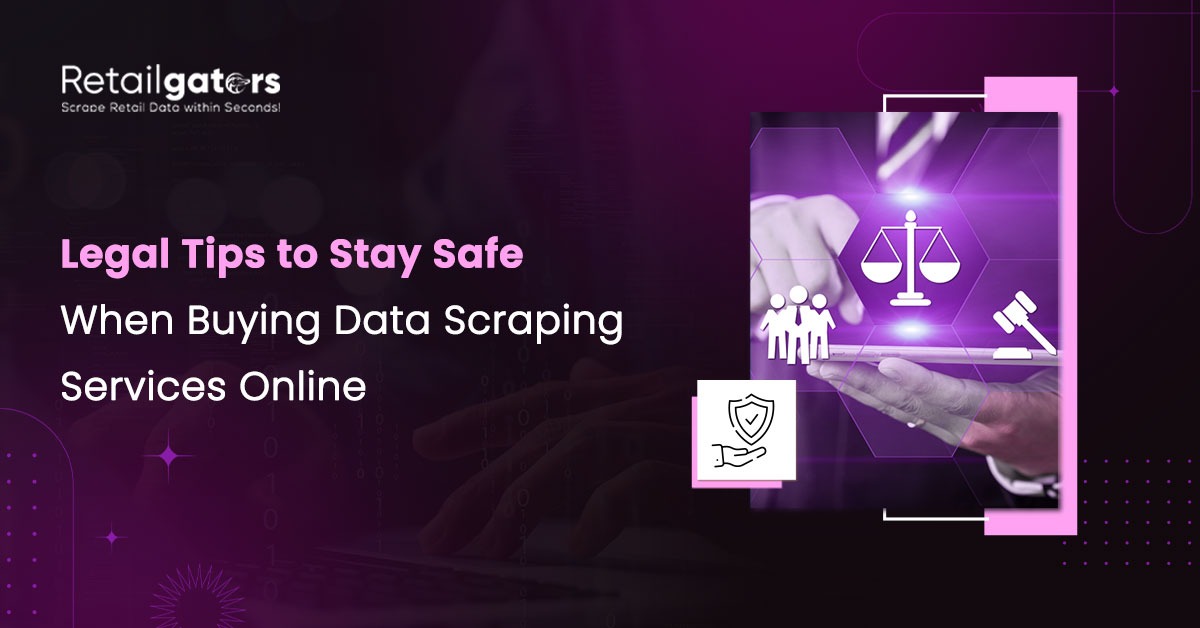
Buying data scraping services can boost your business intelligence and competitive research. However, it comes with legal risks that many businesses overlook. At RetailGators, we help companies navigate the complex landscape of data acquisition safely and legally. This guide covers essential legal tips to protect your business when purchasing web scraping services.
What Are the Legal Risks of Buying Data Scraping Services?
Data scraping exists in a legal gray area. While scraping publicly available data is generally permissible, several laws can affect your operations. The Computer Fraud and Abuse Act (CFAA) in the United States prohibits unauthorized access to computer systems. Additionally, copyright laws, terms of service violations, and data protection regulations like GDPR create potential liability.
Before you buy any scraping service, you must understand three critical risk areas. First, the provider might violate terms of service agreements. Second, scraped data could include personal information protected under privacy laws. Third, your use of scraped data might infringe on intellectual property rights.
Therefore, RetailGators always recommends conducting thorough legal due diligence before engaging any data scraping provider.
How Do You Verify a Data Scraping Provider's Legitimacy?
Legitimate data scraping companies operate transparently. They should provide clear information about their business registration, physical address, and leadership team. Check if the company has a professional website with detailed service descriptions and clear contact information.
Request references from existing clients in your industry. Reputable providers like those vetted by RetailGators willingly share case studies and client testimonials. Moreover, check online reviews on independent platforms to verify the provider's track record.
Ask about their compliance certifications. Do they follow ISO standards for data security? Have they implemented GDPR-compliant data handling procedures? These certifications indicate a provider takes legal compliance seriously.
What Questions Should You Ask Before Hiring a Scraping Service?
Start by asking how the provider collects data. They should explain their methodology clearly without using evasive language. For instance, ask whether they respect robots.txt files, which websites use to communicate crawling preferences.
Next, inquire about their compliance framework. Specifically, ask these questions:
- Do you obtain explicit consent when scraping personal data?
- How do you handle data subject requests for deletion or correction?
- What measures protect against terms of service violations?
- Do you scrape data from password-protected areas?
- How do you verify that target websites allow data collection?
Additionally, ask about data storage and security. Where do they store scraped data? How long do they retain it? What encryption standards do they use? RetailGators emphasizes that providers should offer clear, documented answers to these security questions.
Request information about their liability coverage. Professional scraping services carry errors and omissions insurance to protect clients from legal claims. This insurance demonstrates financial responsibility and professional standards.
Why Is a Written Contract Essential for Data Scraping Services?
Never proceed without a comprehensive written agreement. A proper contract protects both parties and clarifies legal responsibilities. Your contract should explicitly define the scope of services, data sources, delivery formats, and timelines.
The agreement must include specific legal protections. First, require an indemnification clause that protects you if the provider's scraping methods violate laws or third-party rights. Second, include confidentiality provisions to protect your business strategies and data usage plans.
Furthermore, specify data ownership clearly. You should own all scraped data upon delivery. The provider should not retain copies or use your data for other purposes. RetailGators recommends including strict data deletion requirements after project completion.
Include termination clauses that allow you to exit the relationship if legal issues arise. Also, specify which jurisdiction's laws govern the contract. This clarity prevents costly disputes later.
How Can You Ensure Data Privacy Compliance?
Data privacy regulations have become stricter globally. The European Union's GDPR imposes significant penalties for mishandling personal data. California's CCPA provides similar protections for California residents. Consequently, you must ensure your scraping activities comply with all applicable privacy laws.
Only collect data that you genuinely need for legitimate business purposes. This principle, called data minimization, reduces legal exposure. For example, if you need product pricing information from RetailGators' competitors, scrape only pricing data rather than customer information.
Verify that your provider implements appropriate technical safeguards. They should use encryption for data transmission and storage. Access controls should limit who can view or modify scraped data. Regular security audits help identify vulnerabilities.
Document your legal basis for processing personal data. GDPR requires organizations to establish legitimate grounds for data collection. Business intelligence and competitive research can qualify as legitimate interests, but you must demonstrate proportionality and necessity.
What Are the Risks of Scraping Terms of Service Violations?
Most websites include terms of service that prohibit automated data collection. Violating these terms can trigger legal action. Website owners have successfully sued scraping companies for terms of service violations, computer trespass, and unfair competition.
However, recent court decisions have clarified some boundaries. The hiQ Labs v. LinkedIn case established that scraping publicly accessible data may not violate the CFAA. Nevertheless, this protection has limits. Scraping password-protected content or circumventing technical barriers remains legally risky.
Therefore, RetailGators advises clients to focus on truly public data. Avoid services that access restricted areas or bypass security measures. Additionally, respect rate limiting to prevent disrupting website operations, which can strengthen claims of computer trespass.
How Do Intellectual Property Laws Affect Data Scraping?
Copyright law protects original creative works. While facts themselves cannot be copyrighted, the creative expression and compilation of facts can receive protection. Database rights in the European Union provide even stronger protections for compilations of information.
Before using scraped content, evaluate whether it contains copyrightable elements. Product descriptions, images, reviews, and original articles all qualify for copyright protection. Using this content without permission infringes on intellectual property rights.
Focus on extracting factual information rather than creative content. For instance, scraping product prices, specifications, and availability from RetailGators' platform raises fewer copyright concerns than copying detailed product descriptions or marketing materials.
Consider implementing content transformation processes. Analyzing scraped data to generate insights, statistics, or derivative works generally falls under fair use. However, simply republishing scraped content without transformation likely constitutes infringement.
What Red Flags Indicate an Unreliable Scraping Provider?
Several warning signs suggest a provider operates outside legal boundaries. First, be wary of providers who guarantee access to any website without restrictions. Legitimate providers acknowledge legal limitations and decline high-risk projects.
Avoid providers who refuse to explain their scraping methodology. Transparency indicates confidence in legal compliance. Similarly, providers who cannot produce references or case studies may lack experience or have problematic track records.
Extremely low prices often signal corner-cutting on legal compliance. Quality scraping services invest in legal reviews, compliance infrastructure, and professional insurance. These costs reflect in pricing. RetailGators recommends viewing suspiciously cheap services as red flags rather than bargains.
Be cautious of providers operating from jurisdictions with weak legal enforcement. While offshore providers may seem attractive for avoiding liability, they offer little recourse if problems arise. Additionally, using such providers can expose your company to accusations of deliberately circumventing laws.
How Should You Monitor Ongoing Compliance?
Legal compliance requires continuous attention, not just initial due diligence. Therefore, implement regular compliance reviews with your scraping provider. Request quarterly reports documenting their compliance activities, security measures, and any legal challenges they've encountered.
Monitor changes in relevant laws and regulations. Data privacy laws evolve rapidly, with new requirements emerging regularly. Subscribe to legal updates from industry associations and consider consulting with attorneys specializing in data privacy and technology law.
Conduct periodic audits of scraped data. Verify that the data matches your specifications and does not include unauthorized personal information. RetailGators suggests documenting these audits to demonstrate good-faith compliance efforts if legal questions arise later.
Maintain clear records of your data usage. Document why you need specific data, how you use it, and what safeguards you've implemented. This documentation proves essential for demonstrating legitimate business purposes if regulators or private parties challenge your practices.
What Should Your Data Usage Policy Include?
Create a comprehensive policy governing how your organization uses scraped data. This policy should restrict data access to employees with legitimate business needs. It should prohibit sharing scraped data with third parties without legal review.
Include specific provisions for handling personal data. Train employees on privacy requirements and establish clear procedures for responding to data subject requests. Even if you believe scraped data contains no personal information, unexpected situations may arise.
Your policy should address data retention and deletion. Keep scraped data only as long as necessary for your business purposes. Implement automated deletion procedures to reduce accumulated legal exposure. RetailGators emphasizes that excessive data retention increases both security risks and legal liability.
Establish clear consequences for policy violations. Employees who misuse scraped data should face disciplinary action. This demonstrates organizational commitment to legal compliance and helps establish a culture of responsibility.
Where Can You Find Legal Support for Data Scraping Activities?
Technology law attorneys can provide invaluable guidance on scraping compliance. Look for lawyers with specific experience in data privacy, computer fraud laws, and intellectual property. They can review provider contracts, assess legal risks, and develop compliance frameworks.
Industry associations offer resources on legal best practices. Organizations focused on data analytics, market research, and business intelligence often publish guidelines and host educational events. These resources help you stay informed about evolving legal standards.
Consider joining professional networks where businesses share experiences with data providers. Learning from others' challenges helps you avoid similar problems. RetailGators participates in several industry forums where members discuss provider experiences and compliance strategies.
Invest in compliance technology. Software tools can help identify personal data in scraped datasets, monitor for terms of service changes, and document compliance activities. These tools provide valuable evidence of good-faith efforts to operate legally.
Conclusion: Building a Sustainable Data Scraping Strategy
Buying data scraping services offers significant business benefits when done correctly. However, legal compliance must remain your top priority. Start by thoroughly vetting providers, establishing comprehensive contracts, and implementing strong compliance monitoring.
Remember that the legal landscape continues evolving. What seems permissible today might become problematic tomorrow. Therefore, build flexibility into your data acquisition strategy and maintain relationships with legal advisors who understand technology issues.
RetailGators helps businesses access valuable market data while minimizing legal risks. By following these legal tips, you can confidently purchase scraping services that support your business goals without exposing your organization to unnecessary liability. Focus on transparency, documentation, and continuous compliance monitoring to build a sustainable data strategy that withstands legal scrutiny.




Leave a Reply
Your email address will not be published. Required fields are marked