Introduction
Pricing decisions used to happen weekly. Today they happen every hour. E-commerce markets in 2026 shift fast enough that a competitor can undercut your best-selling product before your morning coffee. Retailers operating without real-time intelligence are not losing slowly; they are losing systematically, SKU by SKU, conversion by conversion.
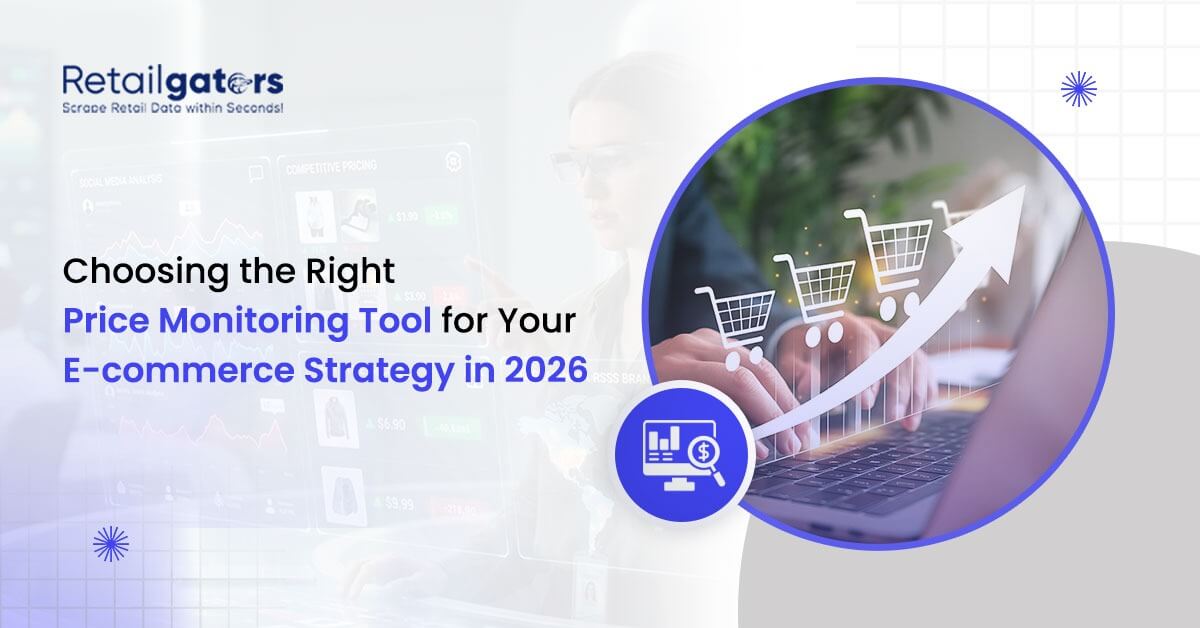
A reliable price monitoring tool solves this problem at the root. It gives your team continuous visibility into competitor pricing, marketplace shifts, and margin opportunities without the overhead of manual research. This guide walks through exactly what that tool should do, which features separate good platforms from great ones, and how to match your selection to your specific business model.
What Is a Price Monitoring Tool?
A price monitoring tool is an automated piece of software that gathers competitor pricing information and compares it with your price list to provide actionable data through dashboards, alerts, and reports.
The way this works is simple: the tool crawls its competitors’ websites and online marketplaces periodically (some do so constantly), matches products to your product with SKUs, barcodes, or AI technologies to analyze the product titles and features, then organizes this data so your team (or your repricing engine) can respond to pricing changes almost instantly.
What a modern price monitoring tool should deliver:
- Automated tracking across competitor websites and major marketplaces
- Product matching with verified accuracy above 95 percent
- Real-time or hourly price change alerts
- Historical pricing data going back at least six months
- MAP (Minimum Advertised Price) violation detection
- Direct integration with your e-commerce platform or repricing software
Price optimization for e-commerce starts here. Every other pricing tactic depends on the quality of data this tool provides.
How Does Competitive Price Monitoring Work in Practice?
Competitive price monitoring is not just about knowing what a competitor charges. It is about understanding pricing patterns well enough to anticipate their next move.
The process works in three stages. First, the tool collects raw pricing data through structured web crawling. Second, it matches competitor listings to your catalog using identifiers and AI similarity scoring. Third, it surfaces insights through reporting, alerts, and trend analysis.
The matching stage is where most tools fail. Platforms that rely solely on title matching produce false matches regularly, especially in categories with many similar products. Strong price monitoring software uses layered matching logic that cross-references multiple data points before confirming a match.
Once data is clean and matched, e-commerce price tracking becomes genuinely useful:
- You can see whether you are priced above or below market across every category
- You can identify competitors who are consistently aggressive on specific product lines
- You can catch promotional drops before they affect your conversion rate
- You can monitor new market entrants who have not yet appeared on your radar
That combination of visibility and speed is what separates reactive pricing from strategic pricing.
Which Features Actually Matter When Evaluating Tools?
Most retail pricing tools market themselves with similar language. The real differences surface when you examine specifics.
Does Coverage Match Your Competitive Reality?
A tool that tracks Amazon well but misses the regional retailers competing for your customers is delivering incomplete intelligence. Before evaluating anything else, map out where your actual competitors sell. Then confirm the tool covers those exact channels.
What Is the Real Update Frequency?
Vendors often advertise “real-time” tracking while delivering data on a six-hour cycle. For online retail price monitoring in fast-moving categories like consumer electronics or daily deals, that gap is unacceptable. Ask for clear information about when updates will be available for your specific types of products.
How Deep Is the Integration Layer?
Automated price tracking only creates business value when it connects to action. A dashboard that your team checks manually is useful. A platform that connects directly to the repricing logic on Shopify, WooCommerce, Magento, or your own custom stack is game-changing. Look for tools that have documented API access and native platform integrations.
How Much Historical Data Is Available?
Seasonal pricing patterns are invisible without historical data. However, a competitor’s Black Friday strategy from the previous year is one of the most reliable indicators of what they will do this year. Tools that limit historical data to 30 days are limiting your strategic visibility significantly.
Is MAP Monitoring Part of the Core Product?
For brands managing reseller networks, MAP compliance monitoring is not optional. It should be part of the platform, not an extra feature that costs money. RetailGators’ competitive price monitoring suite includes MAP violation detection as a standard feature, and brand managers get automated alerts when violations are found.
Comparison Table: Basic vs. Mid-Tier vs. Enterprise Pricing Tools
| Feature | Basic Tools | Mid-Tier Tools | Enterprise Platforms |
|---|---|---|---|
| Update Frequency | Daily | Hourly | Real-time |
| Marketplace Coverage | 3 to 5 platforms | 10 to 20 platforms | 50 or more platforms |
| Repricing Integration | None | Limited | Full API and native |
| Historical Data | 30 days | 6 months | Unlimited |
| MAP Monitoring | No | Yes | Advanced |
| AI Pricing Insights | No | Basic | Advanced |
| Custom Alert Configuration | No | Yes | Fully configurable |
Which Industries Get the Most Value from Price Intelligence Solutions?
Price intelligence solutions benefit every retail vertical, but certain categories operate in pricing environments where monitoring is genuinely mission-critical rather than simply useful.
The five highest-impact categories:
- Consumer Electronics: Margins are razor thin, competitor prices change daily, and buyers comparison shop aggressively before every purchase
- Fashion and Apparel: Seasonal markdown timing is a competitive sport; missing a competitor’s sale window costs conversions directly
- Home and Garden: High SKU volumes and a fragmented competitor landscape make manual tracking genuinely impossible at scale
- Health and Beauty: Marketplace seller proliferation creates persistent MAP challenges and unauthorized price undercutting
- Sports and Outdoors: Branded product lines attract the highest density of reseller MAP violations across all retail categories
RetailGators serves clients across all five verticals, providing price intelligence solutions calibrated to how pricing actually works in each category rather than applying generic monitoring logic across the board.
How to Build a Practical Dynamic Pricing Strategy?
A dynamic pricing strategy is only as reliable as the data behind it. Therefore, building the strategy and selecting the monitoring infrastructure should happen together, not sequentially.
Step1: Define Objective of Rules
This may not seem obvious, but revenue maximization, margin floor protection, and competitive positioning all require fundamentally different repricing logics. Therefore, if the objectives are combined into one priority, it produces contradictory rules that ultimately work against each other.
Step2: Identify Competitors by Category
Not every competitor will have the same influence. Using a price monitoring tool, identify three (3) to five (5) sellers who are directly influencing conversion for each category you sell. Build your repricing rules based on these individuals’ behaviors.
Step 3: Write Explicit and Measurable Repricing Rules
Vagueness leads to unpredictable pricing. Here is a clear and straightforward pricing rule:
- Match the price to the lowest verified competitor, as long as they have the item in stock with more than 150 units available
- Do not lower the price below the stated cost-plus-margin floor, no matter how competitive the market is. Keep the current price during peak periods, even if competitors discount the item.
Step 4: Weekly Performance Review of Margin and Conversion versus Pricing
Actions: Pricing rules change and become less effective over time as competitive dynamics shift. Therefore, it is mandatory to conduct a weekly performance review of margin and conversion data, along with the corresponding pricing actions taken, to retain strategic integrity.
Step 5: Connect Inventory to Pricing Logic
RetailGator’s repricing database is integrated with live inventory signals, thereby eliminating the potential to price an item aggressively when you run low on inventory and, at the same time, destroying margin and increasing fulfillment risk.
What Makes RetailGators Different?
RetailGators is purpose-built for mid-market and enterprise e-commerce operations that have outgrown basic price monitoring software but do not want to invest in custom data infrastructure.
The platform separates itself into four dimensions:
- Matching Accuracy at Scale: Category-aware product matching logic reduces false matches significantly in catalogs exceeding 10,000 SKUs, where generic tools consistently break down.
- Competitor Discovery: The platform surfaces new market entrants automatically before they accumulate enough pricing aggression to affect your sales figures.
- Brand Protection Depth: MAP monitoring goes beyond simple alerts. RetailGators tracks violation frequency by seller, marketplace, and time period, giving brand managers the documentation needed to take action with reseller partners.
- Strategic Onboarding: Unlike tools that hand you a login and a help center link, RetailGators includes pricing strategy consultation during onboarding. Your team leaves the setup with working repricing rules, not just a configured dashboard.
Mistakes That Undermine Price Monitoring Investments
Even well-resourced e-commerce teams make selection errors that cost them months of usable data.
The most common and costly mistakes:
- Prices above anything else, a cheap tool with low-quality match results will cost you much more through bad decisions than you would save from the monthly subscription fee.
- Using daily update cycles on categories where there are intraday price changes.
- Not verifying that the actual competitors to your business are included in the system before you purchase it.
- Not doing a real-world pilot with your own unique SKU catalog, as demos rarely show all of the complexities in live data.
- Repricing rules are often treated as permanent once set up, rather than as living parameters that need to be modified regularly.
Conclusion
A price monitoring tool is not a reporting system. It is a competitive decision-making infrastructure. In 2026, the brands gaining ground on pricing are not spending more time analyzing data; they are spending less time because their tools surface the right signals automatically.
Therefore, select a platform built around accuracy, update frequency, integration depth, and strategic usability. Those four criteria separate tools that look good in demos from tools that produce results in production environments.
RetailGators delivers exactly that combination from foundational e-commerce price tracking to full dynamic pricing strategy execution for businesses that treat pricing as a competitive discipline rather than an administrative task.