What Is Global Store Count Tracking and Why Does It Matter?
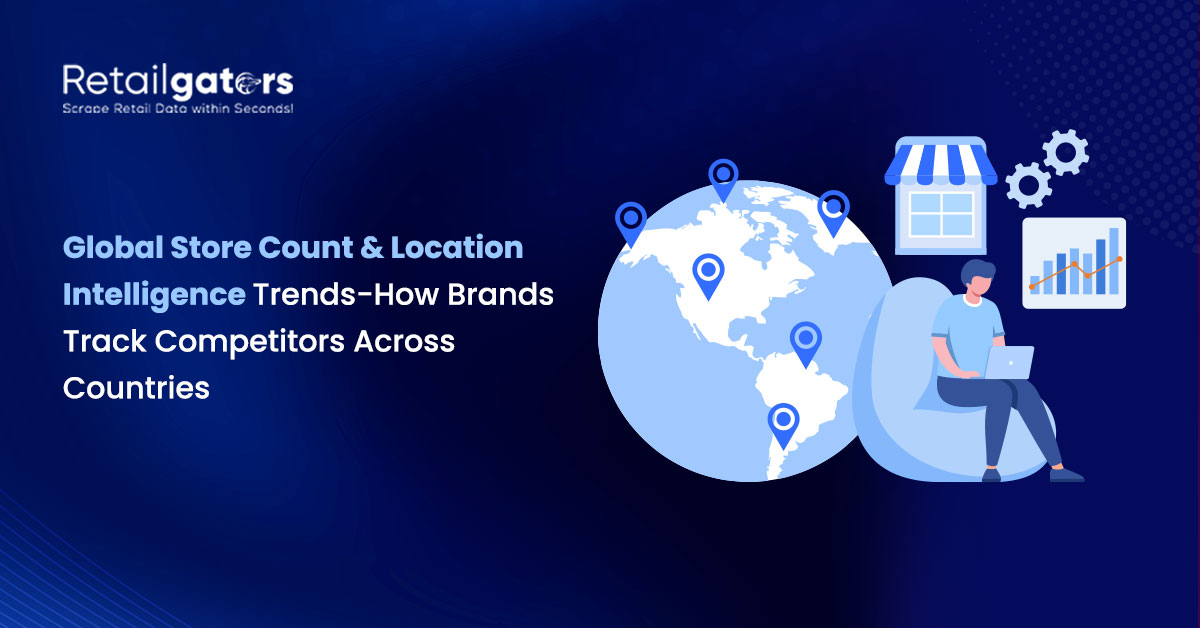
Global store count tracking is the systematic monitoring of retail outlet numbers across different countries and regions. Brands use this intelligence to understand competitive positioning, market penetration rates, and expansion strategies. For retailers and consumer goods companies, knowing exactly how many stores a competitor operates—and where—provides critical strategic advantages.
According to industry research, 73% of retail executives consider competitor location data essential for expansion planning. Therefore, companies that track store counts effectively can identify market gaps, optimize their own footprint, and respond faster to competitive threats. RetailGators specializes in providing this competitive intelligence through advanced location analytics platforms.
How Do Brands Track Competitor Store Counts Internationally?
Brands employ multiple methodologies to gather accurate store count data across borders. These methods range from manual verification to automated data collection systems.
Primary Data Collection Methods
Manual Field Verification: Teams visit physical locations to confirm store operations, formats, and exact addresses. This method provides 95% accuracy but requires significant resources.
Web Scraping and Digital Monitoring: Automated systems scan competitor websites, online store locators, and digital directories. However, this approach only captures stores that companies publicly list online.
Satellite and Geospatial Analysis: Advanced platforms use satellite imagery combined with machine learning to identify retail locations. This technology can detect new construction and closed locations within 30 days of changes.
Government and Regulatory Filings: Many countries require businesses to register commercial locations. These public records provide verifiable store count data, though access varies by jurisdiction.
RetailGators combines all four methods to deliver comprehensive location intelligence that brands can trust for strategic decision-making.
What Are the Key Metrics Beyond Simple Store Count?
While total store numbers matter, sophisticated brands track several related metrics to gain deeper competitive insights.
Store Count by Market Segment
Breaking down locations by format reveals strategic priorities. For instance, a competitor with 200 total stores might operate 150 small-format urban outlets and 50 large suburban locations. This distribution signals their market positioning strategy.
Store Density Analysis
Store density measures outlet concentration per population unit or geographic area. Markets with high competitor density often indicate saturation, while low-density areas represent expansion opportunities. RetailGators calculates density metrics across 180+ countries to identify these patterns.
Opening and Closing Velocity
The rate of new store openings versus closures indicates business health and strategic direction. A brand opening 50 stores quarterly while closing 40 shows different momentum than one opening 80 with zero closures. Therefore, tracking net change provides more insight than static totals.
Format Mix Evolution
Monitoring shifts between store formats reveals adaptation strategies. Brands converting traditional stores to smaller express formats or adding digital pickup points demonstrate evolving customer engagement approaches.
How Has Location Intelligence Technology Changed Competitor Tracking?
Location intelligence platforms have transformed how brands monitor competitive store networks. Modern systems deliver real-time updates rather than quarterly manual reports.
Real-Time Data Updates
Traditional competitor tracking relied on annual reports and infrequent field audits. Now, automated systems detect changes within days. When a competitor opens a new location, brands receive immediate alerts through platforms like RetailGators, enabling faster strategic responses.
Predictive Analytics Integration
Machine learning algorithms now predict likely expansion locations based on historical patterns, demographic data, and market conditions. These models achieve 78% accuracy in forecasting where competitors will open next, according to recent location analytics studies.
Multi-Source Data Fusion
Advanced platforms aggregate data from dozens of sources simultaneously. This approach cross-verifies information, reducing errors and filling coverage gaps. RetailGators integrates 40+ data sources to ensure comprehensive global coverage.
What Challenges Do Brands Face in Global Store Tracking?
Despite technological advances, several obstacles complicate international competitor monitoring.
Data Standardization Issues
Different countries maintain varying address formats, postal systems, and geographic identifiers. A “street” in one nation might be a “road,” “avenue,” or “way” elsewhere. This inconsistency requires sophisticated normalization processes that RetailGators handles through proprietary algorithms.
Franchise Versus Corporate-Owned Confusion
Many retail chains operate mixed models with both corporate and franchised locations. Public disclosures often conflate these categories, making accurate tracking difficult. Brands need systems that distinguish ownership types to understand true competitive positioning.
Dark Stores and Fulfillment Centers
The rise of e-commerce has created ambiguity around what constitutes a “store.” Should brands count dark stores (fulfillment-only facilities) in competitor analysis? Most location intelligence platforms now categorize these separately to provide clearer insights.
Privacy Regulations and Data Access
GDPR in Europe and similar regulations globally restrict certain data collection methods. Brands must balance comprehensive tracking with legal compliance. RetailGators ensures all data collection adheres to international privacy standards.
Which Industries Rely Most Heavily on Store Count Intelligence?
While all retail sectors benefit from location data, several industries consider it mission-critical.
Quick-Service Restaurants (QSR)
Fast food chains track competitor locations obsessively. When McDonald’s knows exactly where Burger King operates globally, they can optimize their own site selection to maximize market coverage. QSR brands typically maintain databases of competitor locations within 500 meters of their own stores.
Convenience Store Chains
7-Eleven, Family Mart, and similar operators use store count intelligence to identify underserved neighborhoods. With thousands of locations globally, even small optimization improvements in site selection yield significant returns.
Fashion and Apparel Retail
Clothing brands monitor competitor store counts to assess brand presence and market penetration. When Zara tracks H&M locations worldwide, they identify expansion opportunities and evaluate relative market strength. RetailGaters provides fashion retailers with detailed competitor footprint analysis across major shopping districts globally.
Grocery and Supermarket Chains
Grocery retailers track competitor locations to understand market saturation and identify expansion opportunities. Store count data helps them decide whether to enter new markets or densify existing territories.
Pharmacy and Healthcare Retail
Chains like Walgreens and CVS monitor each other’s locations intensively. Healthcare retail depends heavily on convenience, making location strategy paramount.
How Do Brands Use Store Count Data for Strategic Decisions?
Location intelligence drives multiple high-stakes business decisions that directly impact revenue and market position.
Market Entry and Exit Decisions
Before entering a new country or region, brands analyze competitor store counts to assess market attractiveness. Low competitor presence might indicate either opportunity or poor market conditions. Therefore, combining store count data with demographic and economic indicators provides clearer guidance.
Site Selection Optimization
Real estate teams use competitor location data to identify optimal new store sites. They avoid over-saturated markets and target underserved areas where they can establish dominant positions. RetailGators offers site selection modules that overlay competitor data with consumer demographic profiles.
Supply Chain and Distribution Planning
Store count distribution influences supply chain decisions. Brands with clustered competitor locations might consolidate distribution centers, while dispersed networks require different logistics strategies.
Marketing and Promotional Strategy
Understanding competitor density helps brands allocate marketing budgets more effectively. Markets with high competitor presence require more aggressive promotional spending to maintain visibility.
What Emerging Trends Are Shaping Location Intelligence?
Several technological and business trends are transforming how brands track and analyze competitor store networks.
AI-Powered Automated Detection
Artificial intelligence now identifies new retail locations from multiple data sources without human intervention. These systems analyze building permits, social media check-ins, job postings, and satellite imagery to detect store openings before official announcements.
Hyperlocal Granularity
Brands now track competitors at the neighborhood level rather than just city-wide. This granularity enables micro-market strategies tailored to specific demographics. RetailGators provides hyperlocal competitive intelligence down to postal code level across 180+ countries.
Integration with Sales and Performance Data
Advanced platforms now correlate competitor locations with sales performance. Brands can quantify how competitor proximity impacts their own store revenue, enabling data-driven expansion decisions.
Mobile Foot Traffic Analysis
Location intelligence platforms increasingly incorporate mobile device data to measure foot traffic at competitor stores. This information reveals not just where competitors operate but how successfully those locations perform.
How Can Smaller Brands Access Location Intelligence?
Historically, comprehensive competitor tracking required substantial resources accessible only to major corporations. However, technology has democratized access to location intelligence.
Cloud-Based Platforms
Modern location intelligence platforms operate on subscription models that small and mid-sized brands can afford. RetailGators offers tiered pricing that makes global store count data accessible to businesses of all sizes.
API Integration
Rather than building proprietary systems, brands can integrate location intelligence APIs into existing business intelligence platforms. This approach reduces implementation costs and accelerates time to value.
Crowdsourced Verification
Some platforms incorporate crowdsourced data verification, where users contribute location updates. This model reduces operational costs while maintaining data accuracy through redundancy.
What Does the Future Hold for Global Store Count Tracking?
Location intelligence will continue evolving as technology advances and business models shift.
Augmented Reality Integration
Future systems may overlay competitor location data directly into field teams’ augmented reality displays, enabling real-time competitive intelligence during site visits.
Blockchain Verification
Blockchain technology could provide immutable verification of store locations and operational status, reducing disputes over competitor data accuracy.
Predictive Market Modeling
Next-generation platforms will not just report current store counts but simulate future market scenarios based on multiple variables. Brands could model outcomes like “if competitor X opens 50 stores in region Y, how should we respond?”
How Should Brands Start Building Location Intelligence Capabilities?
Companies new to systematic competitor tracking should follow a structured approach to build effective capabilities.
Define Clear Objectives
Start by identifying specific questions you need answered. Are you focused on identifying expansion opportunities? Monitoring competitors’ retreat from certain markets? Optimizing existing store networks? Clear objectives shape data collection priorities.
Select Appropriate Technology Partners
Choose location intelligence platforms that match your geographic scope, industry focus, and analytical needs. RetailGators serves brands operating across multiple countries with comprehensive competitor tracking capabilities and customizable reporting.
Integrate with Existing Business Intelligence
Location data delivers maximum value when integrated with sales data, customer demographics, and market research. Build connections between your location intelligence platform and existing data warehouses.
Establish Regular Monitoring Processes
Competitor tracking requires consistency. Establish weekly or monthly reporting cycles that keep decision-makers informed of competitive movements. Automated alerts for significant changes ensure you never miss critical developments.
Conclusion: Location Intelligence as Competitive Advantage
Global store count tracking has evolved from occasional market research projects to continuous strategic intelligence operations. Brands that systematically monitor competitor locations across countries gain substantial advantages in market positioning, expansion planning, and resource allocation.
Modern location intelligence platforms like RetailGators make comprehensive competitor tracking accessible and actionable. As retail continues globalizing and formats diversify, the brands that invest in robust location intelligence capabilities will outperform those making decisions based on incomplete competitive data.
Whether you’re a multinational corporation or an emerging regional chain, understanding exactly where your competitors operate—and how those networks evolve—provides the foundation for winning market strategies. Contact now to get started.